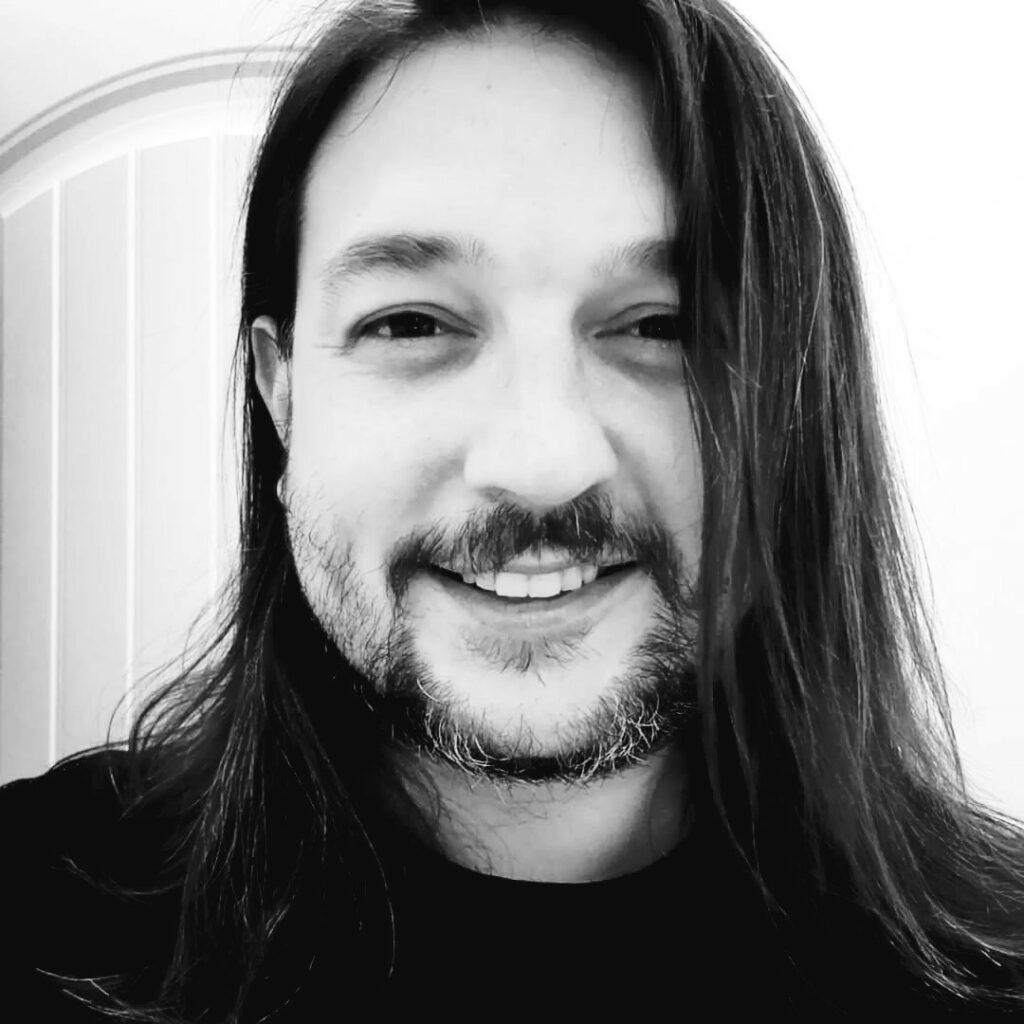
I am a former model and actor who decided to take a turn on the other side of the camera in order to tell stories that truly matter. I come from a family of journalists, and as such, it is my calling.
-What inspired you to become a Filmmaker?
There is a great need to share the harsh realities of the world and its dangers so that we can work to create a better, safer world for future generations. Film and raising awareness is one of the chief ways we can achieve this.
-Do you think the cinema can bring a change in the society?
Absolutely. Media consumption is a huge part of our everyday life. If we read about tragedies and horrors happening both in our country and abroad, we can take the requisite steps to stop them from happening again.
–What would you change in the world?
I would make it so that war and all of its consequences did not exist. I would also make sure everyone exercised clean, sustainable options when it comes to energy and free higher education and healthcare for all.
-Where do you see the film industry going in the next 100 years?
Hopefully we will see more storytellers bringing important issues and causes to the table, making this world a better and more well-informed place.
Sean Gregory Tansey is an artist, a fool, and a fool for love. For the most part, he is a fool for love. That is the only explanation as to why he continues to do what he does.
–What inspired you to become a Fillmmaker?
My love of acting. When I started out, I held the assumption that the film industry, at the very least, would “let me wet my beak,” if I may steal a line from a great film. Well, my expectations did not exactly manifest as I had envisioned. Nonetheless, I kept on with my craft. And over time, I worked to enhance and nourish my technique in ways that go beyond the immediate obligations of an actor. I studied the art of story, the art of cinematography, the art of editing, poetry, spirituality, and on and on. So when the tools of the filmmaker became available to me, I was ready.
–Do you think the cinema can bring a change in the society?
I feel all forms of artistic expression effect and affect society. But cinema is a comprehensive art form. This gives her a very special and powerful dynamic range. Cinema has this unique way of sneaking past an individual’s personal filters and barriers. Great cinema stays with you. If I may steal another line, “to make a very good film is a miracle.”
-What would you change in the world?
Lethargy.
–Where do you see the film industry going in the next 100 years?
Ebb and flow. Devolution, evolution, revolution. For some time now, much of the cinema has devolved. Unless of course you value big explosions and special effects. But out there, somewhere, there are these dungeons. And there are artists in these dungeons. They are bleeding and sweating in there. And they are hungry. And they want to come out. And also out there is this audience. This audience is hungry too. It has a voracious appetite. And so these bloody, sweaty, hungry artists are going to come out. And this audience is going to have them over for dinner. And a sort of quiet evolution is taking place between the two of them. And after this evolution is complete, … well, you know what comes next.
I, Lance Hensley, am a passionate musician, composer, and artist turned filmmaker. As a Writer, Director, and Producer I aim to tell dramatic, emotional stories through a blending of genres and styles while maintaining an elevated visual identity. I also want to write and create self motivated female characters as I grew up around powerful, interesting, self-engaged, complicated, intelligent, emotional, women in my real life. Female characters that don’t simply react or reply to male characters, but create their own impetus.
–What inspired you to become a filmmaker?
I have written novels and poetry as well as composed music so screenwriting was my step into bring a story to the camera. My 6th grade English teacher, Mrs. Stockinger, was from Oxford University and moved to my home town and taught in our elementary school. I learned classical writing from her and have never stopped writing since.
–Do you think the cinema can bring a change in the society?
I think cinema absolutely changes society but I think the subversive things it teaches are far more wide reaching than overt actions. Again, speaking about female characters, it’s subtextual language and actions that influence ingrained prejudices like misogyny into viewers and this teaches boys and men how to act poorly in real life. I want to use subtext and subconscious cues to change and challenge societal norms.
–What would you change in the world?
I would change people’s inability to leave each other alone, in peace. All human prejudice would end if people could worry about themselves and their own lives and just treat everyone else with basic human decency. Not simply tolerance, but true acceptance of people’s differences without imposing wars and hate and rules. But this is merely a dream; a dream we filmmakers can help support and drive forward in our stories and characters.
–Where do you see the film industry going in the next 100 years?
I see film becoming more experimental and broader. I think “Fine Art” films will move away from the common “entertainment industry” films and there will be a greater divide and maybe more shades of grey in that since, or at least I hope it will. I think film is still highly reserved now, compared to the future.
Anna Morelli is a reunion of various things. In short and in terms of education, I can say that I was born in Pisa in 1977 with an Artistic High School diploma and other subsequent specializations in Editing, Ecdl, Photography, Videomaker, Set Design and various others. In 2005 I began my professional career: as a TAU VISUAL Photographer I have worked for many important international brands and presented many important photographic projects for fashion and marketing, I sell digital shots on Italian-American platforms Shutterstock & Pixtury and I have published in Editorials such as “Il Fotografo”, “Dark Beauty Magazine”, “Cerimonie.it”. As a Videomaker I have developed experiences in Television and have collaborated on productions with various artists such as Andrea Balestri actor in the film “The Adventures of Pinocchio” by Luigi Comencini, Pietro Fornaciari actor in the film “Ovosodo” by Paolo Virzì & “Pinocchio” by Matteo Garrone, Paolo Giommarelli actor in the film “The First Beautiful Thing” by Paolo Virzì, and others…. A twenty-year journey that has matured me until I was able to present myself in the Cinema with my debut in 2018 as Director and Screenwriter for the feature film “Cybernetic Genesis – the war between the two worlds”, a three-hour work of science fiction action genre, awarded in many foreign countries and which has received good media success, registered SIAE, distributed in theaters and soon on VOD and available on Blu-Ray Disc. Also since 2018 I have collaborated on post-production and S-VFX special effects, working over time with professional programs and becoming a member of AnimeCorp.it. In November of the same year I founded “Genesis Media Film”, an independent Italian production house for which I am currently President and listed on the best platforms dedicated to Cinema including MUBI and the same organizer of the “Italy Red Carpet Fantastic IFF” Festival proposed on FilmFreeway and WFCN America which aims to bring out new talents in particular in the science fiction, fantasy, action.
Currently (2024) I have full rights as Director and Screenwriter on two multi-award winning international cinema titles/feature films registered with SIAE and I have 3 subjects ready but I am continuously working on both writing and directing to expand my credits and my international partnerships with major companies in the entertainment sector.
Speaking about myself, I can say that I grew up in an artistic context. My father is passionate about video shooting and photography and my mother is a painter/makeup artist backstage at shows in my country. They both gave me a love for art and educated me with an eye for the camera or the lens. I went from painting, to sculpture, to scenography, to photography and video camera… but I can say that since I was a child, at the cinema, I asked myself questions about the production and the directors rather than enjoying the film as an end in itself like everyone else.
I can define myself as very determined and ambitious, a dreamer, very creative and imaginative and I can easily write screenplays in the fantasy-science fiction-fantasy-action genre although thanks to my eclecticism, I can also write good content in other genres such as comedy, horror or actuality. Cinema makes me feel at home because I can imagine without limits a world that I would like or realities that don’t exist. I can shape subjects according to the nuances of my soul and mind, I can enter unknown spaces and I can access places of the collective imagination that others cannot even see. I like to bring the viewer to see and understand stories that arise from the originality of my being. I like to lead the viewer’s soul to reflect on social messages that I love to include in my screenplays even if proposed in a light and different form than usual. Cinema is a complex world, not for everyone, but I believe that those who make cinema are endowed with their own internal world which is worth making visible to everyone, whatever happens.
-What inspired you to become a Filmmaker?
I have always had the feeling of being “tight” in this world and I felt the need to express my interiority on a large scale, a dream come true. Speaking of “way of seeing things”, I don’t have the mood that conforms to the vast majority of society but as far as I’m concerned I consider it a positive side that has allowed me to have that eccentricity, singularity, sixth sense or seventh art aspect that is successful for a good opening words as a Director. I waited for the moment of my debut with patience and perseverance and to become this, I was inspired by the Victories at the Film Festivals, the appreciation received from Juries and Producers, the comparison with Bodies and Institutions dedicated to Cinema and the esteem for my work received sincerely, from all over the world and from other already known Directors or Production Companies. Now, I can only continue this beautiful work. I like to think that something pleasant about me may remain in the future, that I may provide good entertainment, that someone may dream or “navigate” through my films. I like to think that I have contributed to enriching art and culture and have done something great for everyone.
–Do you think the cinema can bring a change in the society?
He’s already brought it so far. Man is a set of senses and perceptions and the visual and sound ones are both the most powerful. Since the Lumières, the world of cinema in terms of image, style and technology has evolved together with the technological and cultural development of man, already automatically channeling the spectator or society to process messages, behaviors and thoughts in an increasingly advanced and different way. and imaginations contained in those products and therefore involuntarily starting to shape the behavioral and psychological way of people. This continued with Sergio Leone, Comencini and subsequently Spielberg, Coppola, Argento and other gurus of those times who continued to develop imagination in people. Imagination enriched in turn by greater sensitivity for music (which in turn triggers emotions) and much more. I personally attribute the true unstoppable incipit of creative development to the second half of the 80s onwards with the advent of digital and the first productions containing special visual effects… until today. In short, Cinema has brought about a change in societies, the problem is to discuss the quality of this change. I think that Cinema is a positive refined art but I also believe that since it is in fact a very powerful means of communication, we must sometimes think better about the methods of development of the contents that are produced both from the point of view of idea and writing and both from the processing/post-production point of view. The excessive use of virtual reality, special effects or “strong” content can be interpreted in an extreme or incorrect way by the new generations absorbed by this system and therefore sometimes be harmful. 3D, stop motion, motion capture and the large VFX business are welcome but the simplest special effects are also welcome. An important and fundamental change in the system would be for this sector which in general should be easier both from an economic and production point of view. Instead, there is a lot of closure around the entertainment giants, leaving difficulties for emerging talents who are sometimes very capable and creative and who, in my opinion, could only increase the quality of the already established companies. And furthermore, considering filmmaking, an art as it actually is, reducing costs for everyone. These two final aspects, if they began to change, would certainly be a notable change in society as they represent not only technological development but also human and social development. This would be the great change that Cinema could bring to today’s society.
–What would you change in the world?
I would remove cynicism, “social cold” and eliminate money, which has always been the cause of all evil. It led to the loss of healthy values. It’s all about money. Often we are not willing to do anything for anyone if there is no personal gain. How many would work for free just out of true love for their profession? There is no altruism. Often so much envy and for what? For fear that the other will assert himself more economically. There is frost in human relationships, mistrust and indifference. Obviously and fortunately it is not a concept for everyone and there are still good people in the world, so still hope. I always try to see in color and find the positive side but, in general, I would reverse the direction of this cynical social current that sometimes spoils even good things. Finally, I would modify some political systems around which, alas, too many things often revolve.
–Where do you see the film industry going in the next 100 years?
There are questions that I ask myself every day regarding VOD platforms in relation to cinema theaters and as long as the theater remains an experience with a unique flavour, the strength of digital distribution is impressive. The productions are increasingly engaging, similar to sensorial journeys. I repeat that everything is evolving at considerable speed and in anticipation of the new entry of AI, my question is not so much where the film industry will arrive but rather who will arrive. We will certainly have the opportunity to experience spectacular films at 360° in supersonic and digitalized environments (whatever environment it is), perhaps there will be a real revenge of the rooms made sensorial in 6D but who will produce the films? Talented directors, screenwriters with superlative minds, excellent actors or will they be productions and performances by refined cyber humanoids? Maybe a director, a screenwriter, an actor, an operator will transform into engineers of their own digital avatar? A good question that can only be answered by living another 100 years because this is certainly the current projection. In the meantime, we will continue to offer our best fighting against our future AI rivals.
I am a writer, poet, author, speaker and a filmmaker, I decided to share my own pain and experience of the underground world of Trafficking to the rest of the world through the lens of a film. Many times, when I speak the translation gets lost for those who are unable to relate to our (survivors) pain, but through film and through visual arts, I can express that into cinematography.
-What inspired you to become a Filmmaker?
When my movie, Eden was made in 2013, I wasn’t aware that my story can inspire change and impact laws in countries all over. E40S is about our girls and boys that are being trafficked in our own countries, but we label them as ‘defiant, unruly, at risk youth and runaways; also in the US, many of the victims of Human Trafficking are not given the same benefit as those in a higher social class or of certain ethnic background. Many African American kids and Indigenous women and girls are trafficked, but our media refuse to acknowledge them. While the general public knows that ‘Human Trafficking’ is a bad thing and a serious problem, there still lies a massive disconnect between what it is, what it means and how it impacts each of us on a visceral level and through filmmaking we can do that.
-Do you think the cinema can bring a change in the society?
Absolutely it can. When films like JFK, Birth of a Nation, the documentary called, “Blackfish’ and so many more that not only creates change, but also creates a national conversations of topics that we need to discuss like: racism, hate, inequality, love loss, mental health and so much more.
-What would you change in the world?
How Film/TV can do so much more than just tell stories. My goal is to utilize my films to collaborate with survivor led programs, to support grassroots charities and to build a studio to hire survivors to write, learn about cinematography and so much more.
-Where do you see the film industry going in the next 100 years?
Films have made a huge impact in transparency and finding relatable topics like: mental health, LGBTQIA and bringing education on cultural difference and also a way to escape from our own daily exhaustion.
I have been fortunate to work and observe many people during my Hollywood days and before that moving around the United States with my father and crazy mother. I’ve lived in poverty and now with my husband in a wonderful house and my car, my dad would have loved a new car that didn’t break down every time he drove it. As for what keeps me going, I’m not dead yet and have a few more stories to tell.
-What inspired you to become a screenwriter?
A desire to tell good stories. I have too many ideas and have to focus on one or two, then I set out to do research on the stories, example: traveling to Japan for ‘Last Stop Toyo’, riding along with police and interviewing detectives here and in Japan. Some of my stories are based on my life’s adventures. I write at least twenty to forty drafts, or more until I feel that the story flows and has surprises that the audience will like.
-Do you think the cinema can bring a change in the society?
Absolutly!!!
-What would you change in the world?
Tolerance, change the me society, to how can I help my fellowman and all living creatures.
-Where do you see the film industry going in the next 100 years?
How many times can they remake great films that underwhelm and disappoint. Mundania rules, shark stories, what’s next, halfman/shark? My time is coming to end, every now and then I catch wonderful stories, TV and movies that give me hope. Hollywood needs to look at new talent in writing, directing, acting and producing.
Who is that? No idea! Haha, well…I am a writer, actor, producer and director who loves telling stories, and I am the owner and founder of Leaky Skylight Pictures. I was born in 1996 and grew up in Castle Rock, Colorado, USA. It’s funny, as a kid I wanted to be a paleontologist, but I ended up a filmmaker! I studied Film and TV Production at the University of Colorado Denver and specialized in writing and producing. From there, I’ve since worked for Starz, Truce Media Collective, The Edge Ziplines and Adventures (that was a hoot), and NBC Universal. I’m also a photographer, fencer, voracious reader, convention attendee, and avid traveler.
-What inspired you to become a screenwriter?
I’ve always loved writing, even as a kid. Growing up, I was always writing stories and making up characters. I knew I wanted to write as part of my career for a long time, but I wasn’t sure what capacity it would be. When I went to college, screenwriting came very naturally, and I dove in head-first. I have yet to resurface. I don’t want to.
-Do you think the cinema can bring a change in the society?
I do.
-What would you change in the world?
Well, in the Bible, it tells us to love our neighbors as ourselves. That’s regardless of our differences. And I think that’s something a lot of people have forgotten and need to remember again.
–Where do you see the film industry going in the next 100 years?
Yikes, that’s a big question. It’s hard to say. We live in a world where technology is changing fast, and so is storytelling. It can be both exciting and terrifying. In terms of technical aspects, I could see virtual reality becoming a much bigger component of the film industry in 100 years. However, in terms of stories, I think they’ll be much broader. If you look at platforms like Tik Tok and Youtube, anyone with a camera can tell a story, make a film, create content. I will say, I think comedy is going to always be a popular component. In fact, I’d say it might even become more so. People want to laugh. They need to.
I am an animator, storyboard artist, editor, actor, author, and independent filmmaker set on becoming a film director.
-What inspired you to become a Filmmaker?
It all started when I was a professional actor while working as a barista at Starbucks Coffee, I was in a place in my life where the path I took in my career wasn’t taking off, until one day during one of my days off work when I watched Ridley Scott’s cult classic sci-fi film, Blade Runner. I had such an interesting viewing experience, a viewing experience I had never had before with a movie, and made me see what film can be and still can be: appreciating this medium as an art form as well as just a form of entertainment. This movie made me see the possibilities of what can be achieved with the array of skills that I had other than just acting, such as drawing, and photography, and later self-taught in editing. I felt that having watched that movie ignited that second spark that set me off on that path of wanting to become a filmmaker, using the skills and knowledge I had at the time, reutilising them all into one basket, and began putting them into practice making short documentaries, short films, and even getting work experience on professional film sets, applying to workshops and collaborating with other like-minded artists, and building up that network. And the rest is history.
-Do you think the cinema can bring a change in the society?
A: The true definition and purpose of art is that it imitates life, and life can be inspired by the art based on how one perceives it, and cinema to this day is an art form that is such an important staple to our tradition as storytellers that can touch people emotionally, mentally, and even physically at a universal scale. The idea of bringing together communities into one room and escape from our everyday problems and be immersed by a world happening in front of us on a silver screen and leave feeling inspired, or leaving an impact to motivate someone like me to go out and set their sights in wanting to be involved in the filmmaking process, or attempt to make movies just like the one they saw at that screening. No matter how much entertainment changes with technology, whether it was the invention of television, watching a movie on a streaming service, or watching something on a handheld device, the experience shared still stands the test of time as a powerful medium yet to be beaten. Human beings are social creatures, we like to go out and catch up with friends, and we like to create, read, or watch movies or TV shows to alleviate the emotional baggage we may be carrying and give us not what we as audience members want but what audience members need. From what I’ve seen so far in how the movie-going experience is looking post-lockdown it seems to still be alive and kicking and not going anywhere any time soon.
-What would you change in the world?
A: I’m not too sure that it is my responsibility to use my work to change the world per se, but what I hope to offer with what I can give people is providing them entertainment and that the work I create can leave them feeling fulfilled or happy, or maybe inspire the next generation of filmmakers after me. It is sure better than putting people down and leaving them in misery from the problems we face today.
-Where do you see the film industry going in the next 100 years?
Pretty much relating to your third question, I see the film industry still going. The entire planet needs entertainment, even for those who don’t know it. Every day we seek stories, and we always told stories since the beginning of time, from the Stone Age days when everyone sat around a fire and shared their own experiences, to drawing or painting on cave walls, to piecing together a series of still images moving 24 frames a second which bleeds inspiration and innovation to push the limits of technology through the human potential that continuously evolves and never stops evolving, and will not stop for the next 100 years, or even the next 100 years after that. As long as the human population still exists there are always new stories to tell, whether it is from our past, or something current, or predicting what the future may look like. Or maybe we just want to make people laugh or scare the living hell out of them for a living.
First I want to say that It is an absolute pleasure to be here at Wild Filmmaker. Thank you for having me. My name is Antoine M Dillard, I am an independent filmmaker with a Master of Fine Arts degree in Visual Effects. I’m originally from New Castle, Delaware but I’ve lived all over the United States. I’ve lived in Delaware, Philadelphia, Phoenix, Florida, Colorado and now Georgia. Which has definitely helped me gain a wider perspective on life, which in turn has helped my storytelling. I’ve been working in independent film since 2010, first as a VFX artist then eventually as a filmmaker.
-What inspired you to become a filmmaker?
I’ve always been a storyteller, ever since I was a kid creating comic books on lined paper and crayons [laughs]. It was really more of a journey to find my medium as opposed to one particular event that made me want to be a filmmaker. Coming out of college I just wanted to create cool visual effects. I landed my first gig as one of many VFX artists for a film called The Otherworld. After a few more projects like Hecate and Inner Dimension (TV Series) I had some down time. So, I decided to give filmmaking a try and tell a short story based on a story I created when I was 8yrs old.
I had been refining this story from 6th grade until my sophomore year of high school and always wanted to tell it. It was extremely ambitious so I decided the best way to go about it was to create a short film that would introduce one character from my story, establish the world, and focus on just two characters on screen. It was a sci-fi detective film noir called Rise of the Avalanche. After I finished that film, I just knew this is what I wanted to do.
-Do you think the cinema can bring a change in the society?
ABSOLUTELY! I mean, it already has, you see it today. Little kids that grew up watching Star Trek became inspired and are now astronauts and engineers for NASA. Kids in the 80’s and 90’s who watched The Sandlot became baseball players BECAUSE of that movie. Cinema has done that since it’s existence for generations and continues to do so today. This is why it’s so important to put out quality films, films that inspire, films that ignite the flames of imagination. Hopeful films, adventures and stories that bring us wonder.
-What would you change in the world?
I would just really like people to slow down and enjoy things more like I did when I was a kid. Revel in film, life around them and the people closest to them. I would love for the world to put greed aside and start enjoying the little things again.
-Where do you see the film industry going in the next 100 years?
That’s a GREAT question! I actually don’t know. How you view film has changed so drastically in my lifetime alone. From theaters only, to VHS, to DVD, Blu Ray and now streaming. No matter how it’s viewed in the future, I hope that the film industry gets back to its roots in 100 years and focuses on the story instead of the dollar bill.
Straight to the good stuff eh? Very existential of you lol! Well this is a deep question and could be answered on multiple levels but I’ll say Luke Rex was born in Sydney, Australia in 1975 and moved to the USA in 2006 at the tender age of 31 to pursue an acting career. I moved out to LA in 2009 to pursue a film acting career, however,3 years into my Los Angeles stint, my acting aspirations hadn’t materialized as envisaged. The glittering promise of starring alongside Robert De Niro or Meryl Streep in the Big Apple remained elusive. I enrolled in community college to study psychology in 2011, studied hard, and transferred to UCLA pre-psychology in 2013, did my MA in Psychology in 2016 and graduated with my Doctorate in Clinical Psychology in 2022. I am now about to become a licensed clinical psychologist! What a journey! Luke Rex is also a certified Reiki Master & Teacher, and loves playing golf and playing classical/Spanish guitar!
–What inspired you to become a filmmaker?
I was put on the artistic path by a former mentor/drama teacher from my high school in Sydney. Together, we co-directed some very fine productions at St Aloysius College. After my formal theatre/acting studies, I made some indie films with friends, TV pilots, but I was focused on pursuing an acting career. Bonding, which won Best International Song and Best Thriller Short at 8 & Halfilm Awards was actually the first short film I have ever directed. I was inspired to exercise the courage required to make a short film. I had enough experience from the work I had done as an actor, and decided to bite the bullet and just do it after my psychology doctorate graduation last year. It was an amazing experience! I wrote, directed, produced, acted, and even co-composed the music! We have over 70 Official Selections, 30 Award Wins and as many nominations!
–Do you think the cinema can bring a change in the society?
100% yes – I mean I think straight away of what Lucas and Spielberg have done to help humanity feel more attuned to a universe bigger than our own planet and solar system. Cinema, like any art form, can elevate our level of consciousness and enhance connectivity to others. Film is a very powerful medium. The moving image: being in a dark, shared space and seeing that giant image up there on the screen – it magnifies our follies and illuminates our potential. It can make us laugh and move us to tears. It is a wonderful vehicle for human transformation. We even use it as a form of therapy! So yes – it can definitely bring change to society for sure! But we have to be careful. Like anything powerful, it can also be used in such a way to lower our level of consciousness and influence and impact us in negative ways.
–What would you change in the world?
The way wealth is distributed. We need not live in a world juxtaposed by multi-billionaires a hundred times over versus people starving to death. Doesn’t make sense to me. Perhaps we need to develop greater compassion and tolerance for one other. Also, no more fighting each other. War. Such a tragedy to see human beings at their worst – usually to attain some form of power, greed, control, ego. And for what?! We are only here a short time in this human embodiment. The true joys of life are in connecting with one another and ultimately, Source.
Finally, lobbying governments in politics. Ban it. I feel like the whole political system is set up to unfortunately not serve the people, but the politicians. I don’t want to take away from the fine work some politicians do, but part of the system has failed before it has even begun.
–Where do you see the film industry going in the next 100 years?
What a great question! In the next 100 years, film could be a completely immersive experience such that you would not know the difference between your waking life and being at, or rather, in, the movies. Rather than the film being on a 2-D screen in a cinema, the audience will instead feel like they are really there – like the holodeck from Star Trek. It seems to me we have become immersed in special effects but I hope we never lose the good old-fashioned story to watch. People need good stories. In 100 years, perhaps in less than 10, even 5, we will have our first AI film – sadly it will break box office records because people will be curious to see it. There will also be films with actors that have died decades ago, acting with one another e.g. James Dean and Robert De Niro in a film with Sophia Loren, and maybe even Luke Rex! Live theatre will have a renaissance because people will be seeking aliveness and immediacy.