“The Hypnotizer” (EXCLUSIVE) Interview with Ignacio Marín Aedo

-Who is Ignacio Marín Aedo?

I want to believe that I’m a 27-year-old Chilean filmmaker with a lot of potential, but the truth is that
I consider myself a little kid playing movies with his friends. I’m the father of a beautiful 6-year-old
girl named Isabella. I hate waiting in lines for too long, and I can’t live without eating fruit.

What inspired you to become a filmmaker?

I’ve always been passionate about the world of communications. In cinema, I found a way to connect
with others and communicate my vision of the world without saying a single word.
I like to think that anyone in the world can be an inspiration.

-Do you think the cinema can bring a change in the society?

I think of cinema as one of the most powerful tools in all of human history, and I like to
believe that I feel the weight of that responsibility. Undoubtedly, cinema can be a driver of
social change, and it already is. Every story we choose to tell brings visibility to a group of
individuals with realities we were previously unaware of. I believe that’s where the art of
this discipline resides

-What would you change in the world?

The influence of social media in our daily lives. I don’t have Instagram, and I hope to soon be
able to quit Facebook. Don’t even get me started on TikTok. I have a pessimistic view of this
aspect of our lives, as I don’t like how it affects relationships and human communication. I
believe that a part of our essence is online all the time, and we spend the other part offline,
on the way somewhere or waiting for another moment. Besides, my neck hurts a lot when I
use the phone. Why do we have to look down?

-Where do you see the film industry going in the next 100 years?

It’s a tough question; I struggle to project my life into the future, let alone the film industry.
However, I believe that the part of technology I like the least will have the most influence on
the industry. I dare to say that we will transition from the film industry to the content
industry. It will be content tailored to each individual’s preferences, probably generated
instantly by some kind of super processor. I’ve never been good at science fiction.

“Tumble Weave” (EXCLUSIVE) Interview with Andreia Solomon Burke

-Who is Andreia Solomon Burke?

This is a difficult question only because I am still learning who I am. When I have private talks with myself, I never feel like I have accomplished anything, but when I hear what other people think of me, I’m like … wow, I don’t give myself enough credit. I’m so complex yet simple at the same time. Complex in the sense that I’m never fully satisfied with where I’m at because I know that there is so much more to life and I’m constantly trying to get there, but simple in a way that sitting by the sea in my favourite café with a coffee and my thoughts is so satisfying.

However, I must say, that after my husband was deported to the UK, his birth country, I realised how much inner strength I had. My head swirled every day from different dilemmas, my husband was in a country that he hasn’t lived in for over thirty-years; our daughters were traumatised, but I had to keep moving as if nothing happened.

Eventually, we joined my husband in the UK, and this afforded me the opportunity to delve into my creative side. Since living in the UK, I have written two novels, five scripts and directed two award-winning short films under my family’s production company, A Fave Five Films Ltd.

But the true essence of who Andreia Solomon Burke is… I love my family and extended family tremendously, and although it may sound cliché, everything I do is for them.

-What inspired you to become a filmmaker?

After writing my first novel, Relay-tionships, the thirst was on for me to become a filmmaker. I have such a vivid imagination that every page I wrote I saw the scenery, the characters, and at times even fell in and out of love with the characters. From then I was on a mission to get the film made. I wrote the screenplay and have never given up on that dream.

-Do you think the cinema can bring a change in the society?

Being completely honest… if the major studios keep churning out films with the repetitive car chase, shootout in the middle of the street, and massive explosion type films, I’m afraid the answer is no. There was a time when going to the cinema was a huge deal, the buildup of the films leading up to its release day was incredible. You saved your money because you dare not be the person who didn’t see the film.

We must return to the art of true storytelling, then, we might be hopeful that films can influence society in a positive way.

-What would you change in the world?

I’d like to take ‘I Don’t Have a Clue, for 200, Alex. But no, seriously… racism, erroneous perceptions of women of colour, paygrades for teachers, healthcare workers and finally, the retirement age for senior citizens.

-Where do you see the film industry going in the next 100 years?

I pray that it’s still around. In the era of Netflix & Chill and the multitude of steaming services it’s scary to think where cinema will be in 25 years from now, let alone 100. This isn’t to say that most steaming services don’t have anything to offer, but it’s changed the industry tremendously.

Live action films have become preposterously expensive to make, even with animation films grossing vastly more than live action films. We have moved away from the beauty of films and how they used to make us feel and it would be amazing to go back to those times.

“My Digital Truth” (EXCLUSIVE) Interview with Swen Werner

-Who is Swen Werner?

I find myself a bit of a paradox: a finance professional with a rich tapestry of interests ranging from the arts and electronic music to philosophy. Some might say it’s a bit eccentric, but I believe it just makes me human. “My Digital Truth” started as my personal quest for redemption during a challenging time, but it’s evolved into something much grander. I’m deeply fascinated by the potential of blockchain technology to reshape our interactions and market structures, making them more attractive to people who decide to stay away and giving everyone a platform to be heard. Art and storytelling are the creative forces that will guide us there.

-What inspired you to become a filmmaker?

The desire to explore and express the multifaceted human experience and our interconnectedness led me to filmmaking, a canvas where narrative, music, and visuals harmoniously unite. This creative journey culminated in my short film “My Digital Truth,” where I also penned a song that encapsulates the film’s essence and my artistic vision. This medium offers a unique opportunity to delve deep into the human psyche, shedding light on the intricate tapestry that makes us who we are as uncomfortable as it may be sometimes. “My Digital Truth” is my creative outlet, allowing me to weave all my various interests into a narrative that explores human experience, technology, and our collective existence.

-Do you think the cinema can bring about change in society?

Absolutely. Films have the unique ability to resonate with people on a profound emotional level, challenging their views and opening their eyes to new perspectives. By highlighting different cultures, experiences, and social issues, cinema can be a catalyst for empathy, understanding, and awareness, ultimately contributing to a more inclusive society. That’s my hope, at least.

-What would you change in the world?

The movie “Bedazzled” serves as a cautionary and funny tale for me – the protagonist is granted seven wishes, but each one goes awry. With that in mind, if I could make a change, it would be to foster a world that fully embraces our diversity in every form. I believe in the mantra “you do you, but let me be me” but we all carry biases. I hope we continue to develop a collective spirit of forgiveness and compassion, although sometimes I am not too sure. Less theatre, more realness, I think that would be a good change.

-Where do you see the film industry going in the next 100 years?

From the little I know, it looks like that the film industry will undergo a significant transformation, with AI and other technologies making filmmaking more accessible and opening up new avenues for storytelling. However, as we integrate AI, we must carefully navigate the creative and ethical implications that come with it, ensuring that lose more than we gain in the process. Just as social media has altered the information landscape, our reliance on technology can amplify issues around content control and censorship. While AI presents a realm of narrative possibilities, it’s crucial that we remain vigilant in addressing the ethical considerations that invariably accompany such advancements.

“Bella Luna Productions” (EXCLUSIVE) Interview with Jude Rawlins

-Who is Jude Rawlins?

British/Irish filmmaker, musician, writer, artist, living in America. Winner of the 2022 Jean-Luc Godard Award. Husband of the phenomenal actress Rebecca Haroldson. Cat whisperer. Feminist. Book junkie. Decent chef. Some days I also think I am the only good driver in the Midwest.

-What inspired you to become a filmmaker?

I think the first time I learned about the concept of a film director was when Alfred Hitchcock died. I was eight years old. Sometime later I saw my first Hitchcock film with my dad, which was Strangers on a Train. My dad pointed out Hitchcock’s cameo, when he climbs on to a train carrying a cello case. It was the first time I ever watched a film in the knowledge that somebody had actually made it. It fascinated me completely. My mother had a big coffee table book about actors and movie stars and I must have read it cover to cover a hundred times. Around the same time my dad bought me my first proper camera, a 1960s Praktica 35mm single lens reflex, made in East Germany. It had a 50 mm Zeiss lens and came with an old 1940s Weston Master light meter. I learned everything I know about photography and composition on that camera. I had an active imagination and a veracious appetite for literature and films and music, so it was probably only a matter of time. But I never had any ambition to be a filmmaker as such. I just have a lot of ideas and I have to get them out or they drive me mad. I also have a phenomenally good memory, I believe I can even remember being born. So there’s always a story to tell, there is always some kind of poetry, or a feeling that needs expressing, and filmmaking is the most exciting way I know of to explore these things.

-Do you think the cinema can bring a change in the society?

Anything that can capture the imagination has the power to inspire change. But I agree with Susan Sontag and Clement Greenburg, the only thing we should ask of art is that it be good.

-What would you change in the world?

Aside from all the obvious things like getting rid of death and war and inequality and prejudice and injustice, I would like to see a world in which artists are properly appreciated, especially in the UK and America. When you look at the way Britain treated Michael Powell and Ken Russell, the greatest British filmmakers of their generation, it’s just unacceptable. They are happy to give out awards in their names but they wouldn’t fund their films. But you go to Italy and Fellini is revered, almost like a saint, and rightly so. The same with Bergman in Sweden. But in any event, I’d settle for a world in which men had the intelligence and the balls to wake up and realize that the patriarchy isn’t doing them any favors. Or maybe I’d just get rid of CGI. There’s no alchemy in computer effects, even a six year old knows it was just made on a computer…

-Where do you see the film industry going in the next 100 years?

It’s an interesting question. I don’t see any future for cinema unless filmmakers start taking real chances again and audiences find the guts to think outside the box. Martin Scorsese has been talking a lot about this recently, and I’m inclined to agree with him although I think he should stop looking to Hollywood for the answers, because you’re never going to get them from there. The fact is that there are great films being made independently all the time, but streaming has unplugged us from the true beating heart of Cinema, which is the collective experience of seeing a movie in a theater. I never used to think this, I grew up in a town with no movie theater so my relationship with films largely grew from television. But the first time I saw one of my own films on the big screen I suddenly understood. Personally I think the artists matter because they make the films, and the audience matters because they watch the films, and the theaters matter because it’s where those two worlds meet. But the rest is just gatekeeping and middle men, and life’s too short for that. Every serious filmmaker will have to become their own industry, there’s no other way to survive, create beauty and tell the truth.

“Sanity Road” (EXCLUSIVE) Interview with Eric Kelso

-Who is Eric Kelso?

I used to be a “coastal Californian” growing up in Santa Cruz, Carmel, and Santa Barbara, where I was a “film major” at UCSB. Upon graduating I set out to be a “traveler” venturing around the globe and eventually fell in love with Japan and settled here. Since 1990, I’ve been working in Tokyo as a “voice actor and writer” in TV, radio and video games. So, I’ve lived most of my life in Japan, but that doesn’t really make me “Japanese” either. I’d like to think that I’m “open-minded, creative, and kind” – on a good day. And I’ve realized that I have no need for a country, religion, political party or allegiance to any group at all.

-What inspired you to become a screenwriter?

My greatest love in life has always been film, alone in the dark, eating popcorn, living inside the dreams that others are brave enough to write down. It’s the greatest of all mediums because it combines all mediums. Photography, acting, music, design of all kinds, and at the heart of it is literature – the screenplay. Directors can’t tell the tale without a good tale to tell. Actors can’t bring characters to life if they fall unnatural and dead on the page. And it’s something I can do alone, like eating popcorn in the dark.

-Do you think cinema can bring a change to society?

Definitely. More than any medium can. It’s the only medium that can visually move through space and time. It’s the closest representation we have to how humans experience life. It shows us at our best and our worst. It can inspire and disgust, make us laugh and cry, and bring back special moments in our lives when we watch those golden gems once again. Movies move us and move with us. The potential to change, speak to, influence, teach, and enlighten us are limitless. And gives us hope. Because there’s always a new movie coming out soon that we’re living to see.

-What would you change in the world?

Make everything fair. But life’s not fair, so that’s out. Equality for all. I think good people are trying but bad people don’t want that, so that’s going to take some time. Education and healthcare for all. The two biggies. That just seems like a decent way to take care of the ones you say you love. And let’s not kill our mother, Mother Nature. Killing her is not only disrespectful, but also suicide – arrogant, selfish stupidity. Hopefully, clean technology can save us before dirty technology kills us. It’s a race that I hope we can win someday.

-Where do you see the film industry going in the next 100 years?

Beyond my imagination. Hopefully, humans will still be involved at every level of creation. AI will be used responsibly as a tool, not a force. New films, new original ideas will run free, not just warmed over versions of things that were once popular splattered across the screen. And we must remember that film is more than just an industry. It takes hundreds of people to make a film, all dedicated to the creative art of storytelling. Storytelling! The most ancient of all mediums. Movies explain who we are, where we came from, what we dream, why we love, why we hate and kill. It’s a record of our species. Definitely, not just an industry. We must always remember that, and protect that.

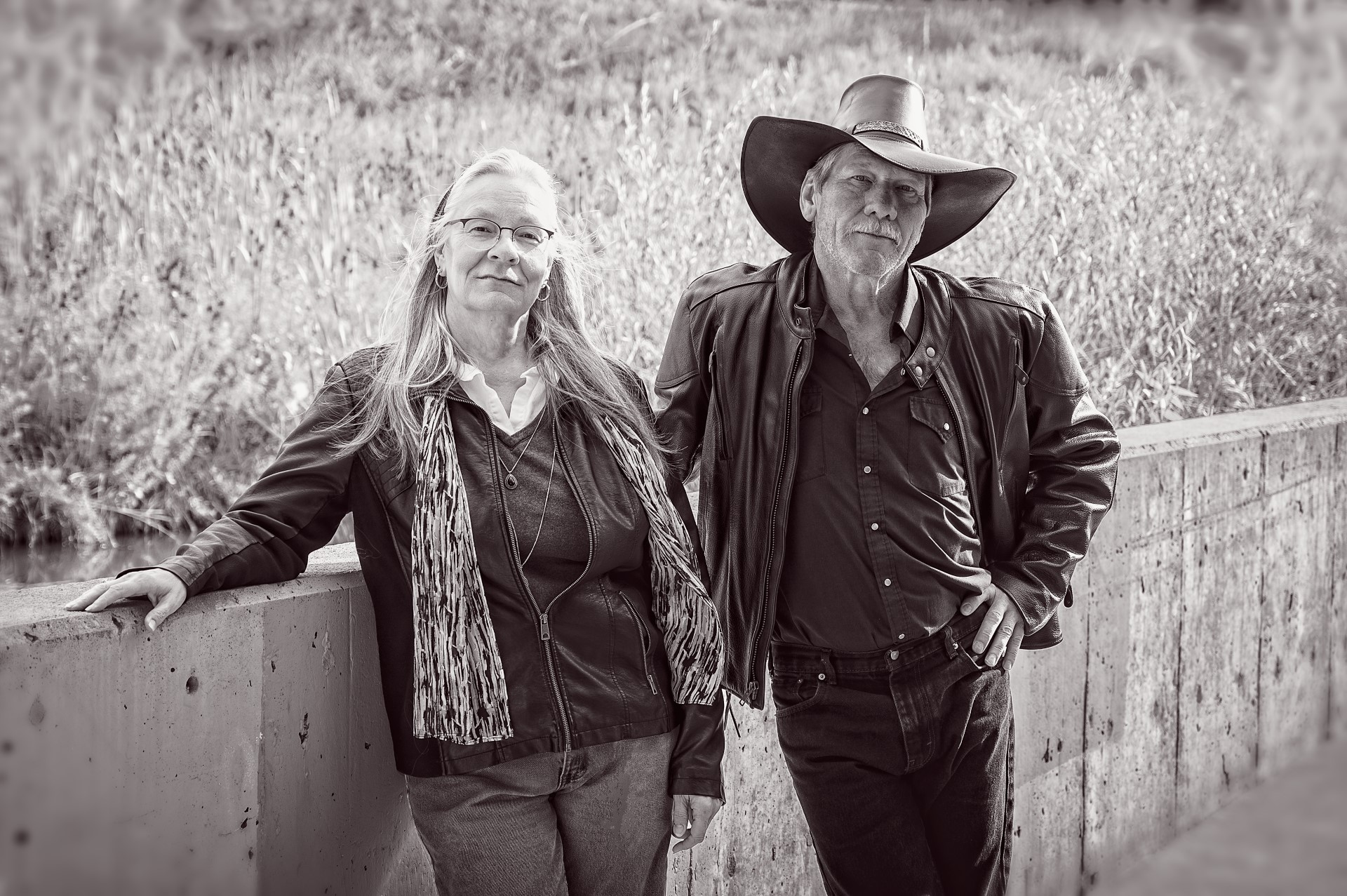
“Appointment with The Plague Doctor, Lester Haywood” (EXCLUSIVE) Interview with L. S. Strange

-Who is L. S. Strange?

As residents of the state of Colorado, we enjoy camping in the Rocky Mountains and exploring historic locations, including cemeteries.  We are a husband and wife writing team crafting stories and film works in the horror, mystery, thriller, and science fiction genres.   Our horror film, novels and short stories, based in Colorado, provide a tantalizing escape. 

-What inspired you to become a filmmaker?

After taking still shots for posters and merchandise of our original recently created horror character, ‘The Plague Doctor, Lester Haywood’, we wanted to literally bring him to life. This inspired us to go to a location and begin filming. Easy in concept but not application. The character of Lester Haywood is thought to be folklore from the American Old West and seeks out those who doubt he exists.  Non-believers transcend time and dimension as Lester administers his warped sense of justice.  Then we wondered, ‘how could we do that?’ Having a zero-budget film provided a whole new level of challenges.  We expected a member of the production team or cast to ask us, “did you fall and hit your head?” Overcoming these hurdles was extremely rewarding. Seeing our character come to life motivated us to pursue additional projects beginning with a full-length horror feature of The Plague Doctor, Lester Haywood.  Currently our team is gathering resources to move forward with scripting and production.  We are also pitching a television series based on the short stories from our book, ‘Normal Thoughts From A Strange Mind Volume I’. 

-Do you think the cinema can bring a change in the society?

Yes. Everything a person experiences impacts them, sometimes good, sometimes bad.  Films provide entertainment, an escape from daily stress that hopefully results in a long-lasting effect on their lives.  Films also provide educational opportunities so that real life monstrous actions become the hallmarks of unacceptable behaviors.

-What would you change in the world?

We would change it so that humanity would rise to a higher level of love, empathy and compassion.  Pushing past deep seeded bias to break restrictive boundaries so that the value of family is strengthened, and a kid can be a kid without the burden of adult woes.  So that we look inside ourselves to see how we can be a better person, because we are all one world.

-Where do you see the film industry going in the next 100 years?

Wow!  It’s staggering what occurred in the past century moving from silent motion pictures to the incorporation of sound and on to special effects.  Technology has been growing at an exponential rate and we are all trying to keep up.  The future holds endless possibilities and sparks expansion of thought and expression, compelling creators to reach beyond existing paradigms.  Each genre stimulates a different sense and culminates with a fulfillment that may not be available in any other aspect of life.  We hope that in 100 years these will be the tenets for future generations of filmmakers, to provide that escape, that much needed stress relief so that for a time, we can step into another world and truly be masters of our destiny. 

https://www.lsstrange.com/

“স্মৃতি – The Reminiscence” (EXCLUSIVE) Interview with Subhadeep Ghosh

-Who is Subhadeep Ghosh?

I must introduce myself as an enthusiast trying to make independent cinema. I was born and brought up in Kolkata, India. From the very beginning, I had a deep interest in literature. Over a period of time, film slowly became my center of interest. I started making films with my own story and script. ‘The Reminiscence’ is the first short film written and directed by me. It has already been awarded at many international film festivals. I have a plan to make two more short films that will not be the sequels to the first one, but those three would have a thematic coherence, so I will call them a trilogy. Apart from this, I am also writing a few scripts from which I will make my first full-length feature in the future.

-What inspired you to become a filmmaker?

My family, my city and the culture of my race have made me what I am. It was not that from the very boyhood I used to wander about along the streets with a camera in my hand. Rather, I was very fond of games and sports and reading books in my early age. My father was never a professional cultural worker. He is a professor of mathematics. But the library of this man , has a good collection of film magazines and books on films along with a heap of mathematical and scientific books and volumes of literary works. He has given the film portion of his library to my exclusive use. At my teen age, he told me about film as a form of art, and also from him, I got the opportunity to know the names of great film makers like Fellini, Pasolini, Antonioni, Buñuel, Bergman, Orson Welles etc.. He used to watch their films as a youth in the film society shows of Kolkata. And to me, it became a fascinating experience to see the films of Satyajit Ray and Ritwik Ghatak in my own city, Kolkata. Later, I also got the opportunity to watch the films of the above-mentioned great international masters at the festivals held in Kolkata. That was an astonishing experience. I got a deep feeling that if I have to observe and catch my time and my surroundings, then film as fine art is the only option for doing that. To be honest, I didn’t think about doing the film myself at the beginning. The first thing I do with a movie is to watch it and judge its merits and demerits. That means, film criticism. However, it still continues. For the past twenty years, I have been writing mainly in Bengali and sometimes in English in various magazines about films and other related art forms. I have also written a book in Bengali on South Korean filmmaker

Kim Ki-duk. While doing these, I felt an urge to express my experiences and my surroundings artistically. It seems that this is the right time to take a direct hand in the very important work of filmmaking in addition to criticism. Hence the idea of short films. This is my inspiration. There is still a long way to go.

-Do you think the cinema can bring a change in the society?

I think this is a basic question surrounding any art form. As a result, the question of whether cinema can bring about change in society is connected with the question of whether art can bring about change in society. I think it can do. But that is not a direct social change. It can be said that art gives a shock to the human psyche, and this shock has the potential to slowly change the human psyche. And since the individual is a part of society, the possibility of many people’s changing over a long period of time, which in fact creates the possibility of social change, can’t be denied. The role of cinema is very important in this regard. Because of this audio-visual medium, cinema is perhaps the only art form that does not require reading and writing to be enjoyed. You can only see and hear. As a result, its scope in human society is much greater than that of art like poetry, stories, or novels. Both the strength and weakness of a film exist here. Just as cinema is the most easily degradable form of the arts, it also has the most potential for a great idea to reach the greatest number of people. So it all depends on the creator.

-What would you change in the world?

I will try my best to create an audio-visual mood with a taste that is original. Andrei Tarkovsky of Russia or Ritwik Ghatak of my country thought that cinema had a spiritual purpose. Cinema is not just art for art’s sake. There will be something in it that will make people think about social good and bad, about the conflict between individual man and social man, and about the direction of civilization. The point is to motivate people to think. Because this thought can one day bring about change in the individual and the social mind in a large sense.

-Where do you see the film industry going in the next 100 years?

The use of AI in cinema is increasing. 3D movies are the new trend now. Cinema, or any art, has two sides. One is its entertainment side; the other is its aesthetic. The use of AI and 3D is mainly with entertainment and commercial purposes in mind. For independent filmmakers, these are quite expensive and, thus, not yet very usable. Thanks to digital technology, movies can be made at a much lower cost than before. That was desirable so that we can make a picture as easily as we all can write a story. As long as people talk about the people around them and about a better society, movies will survive. AI and 3D technology will also be used in the future to make people speak in new ways. And even if the big screen is shrinking amid the OTT boom going on around the world, the big screen seems to be here to stay because cinema is essentially a big screen industry.

“Out of State-A Gothic Romance” (EXCLUSIVE) Interview with Victoria Bugbee

-Who is Victoria Bugbee?

I’m an award winning filmmaker, playwright and visual artist who lives outside of New York City.. “Out of State-A Gothic Romance” is my first feature film that I filmed in my old Victorian house. My family is very important to me and my first film is about The Garth Family, a very dysfunctional one. Trained as a visual artist, I created experimental audience immersive performance staged everyday places – an auto body shop, a laundromat, a furniture store window and an urban parking lot. Plays include  “Murder at Le Pavillion Hotel,” “The Vacation-Worlds of Desperation,” “Boxer Shorts.” “Life & Death With Business In Between”began as a series of mural size pastels, then a performance and it is now a surreal musical.

I received a commission from Creative Time and Lincoln Center to create “A Surreal Soap Opera-Toxic Waste Meets Beach Resort,” an audience immersive black comedy about climate crisis. Videotaping the performances lead to a career in commercial film & fashion videos for New York Fashion Week, Oscar de la Renta, Vogue, CBS, STARZ, GQ and more.

Currently, I am adapting my play “The Gas Station Project” into a feature film. With cars as metaphor all the world’s a showcase. It deals with a young couple who own an automotive center in rural Florida. Their crumbling marriage is told through their eyes, their children and their best friends.

-What inspired you to become a filmmaker?

Trained as a visual artist,I wanted my drawings to leap off the paper and found my ability to visualize and tell stories as a filmmaker. I was always surrounded by art, theater and movies.There was a little movie theater down the street from our house. Every Saturday they showed a double feature and my sister and brothers would spend every afternoon there watching everything from Disney, to horror to big Hollywood Westerns andBiblical movies. My parents took a car load of kids to the drive-ins. As teenagers we’d go into the movie houses that showed European films and I was captivated by the different sensibility, language of filmmaking. As an art student living in Argentina, heaven was sitting on folding chairs, drinking coffee and smoking while taking in Polanski tales, Fellini masterpieces and Bergman’s psychological dramas.

-Do you think cinema can change the world?

Cinema is a very powerful tool that change change the world. Well crafted moving image combined with words, music and brilliant editing can stir deep emotional responses in the viewer. Take for example Spiieberg’s “Schnidler’s List” it prompted people to say “Never Again.” Recent movies like “Fancy Dance” a new film by Erica Tremblay focused on the plight of Native American Indian women who have gone missing with police turn a blind eye to their plight. Conversely, uplighting films give people hope for the future.

-What would you change in the world?

The violence, hate, bloodshed and one nation or ideology trying to take over another country or ethnic group is unsustainable. We need to strive for peace. At the same time climate crisis is unsustainable. This has to be a global effort to change the path of climate warming if we are to survive. I wrote “A Surreal Soap Opera-Toxic Waste Meets Beach Resort” over 30 years ago. In the play dead birds fall out of the sky, heaps of trash thrown from the audience litters the stage and a toxic green gas kills all the players. It was surreal but now this is reality. For if the surreal exits within the mind, reality lies outside.

-Where do you see the film industry going in the next 100 years?

If you look at the past hundred years of filmmaking from silent black & white films to 3-D computer generated imagery married with live action the future is endless. Yet at the heart of filmmaking is great story telling. As long as we stay human and examine the human condition, the art of filmmaking and technology will follow. The fact that everyone now has the capability to make movies with their phones is remarkable. This will continue to broaden what stories can and should be told.

“Suite Killing Machines” (EXCLUSIVE) Interview with Austin Galante

-Who is Austin Galante?

I’m a guy who likes doing a wide variety of things. I’m a dad and a husband who likes acting, directing, playing with lighting, growing flowers, watching movies. I’m a music producer and vocalist. I’m a photographer. I’ve shot and directed over 25 music videos and just this last year I wrote, produced, directed, scored, and acted in the Movie “Suite Killing Machines” Having spent the last several decades learning how to do a wide variety of arts gave me the ability to take on the process of creating a movie all under my own direction. I was able to do almost every aspect of the creation of the film by myself. It was a neat experience.

-What inspired you to become a filmmaker?

I lived in L.A. for 8 years and I got to act in a number of films, commercials, and music videos. It was a great experience getting to see how multi million dollar production worked. I ended up getting married, having kids and moving around the country a couple times. But once my kids started getting a little older I started shooting music videos and working with people in film around the Milwaukee/Chicago area. One of my friends asked if I wanted to shoot a short or something and I said, sure let me write something: but that something ended up being a 50 page script. I felt confident I could cover all the bases besides on set sound; so my friend Doug Montoya (who also acts in the film), lined up a sound guy and we shot a movie with only 2 crew members (a sound guy and me), plus 5 actors. It was a strenuous experience, but we got it done. I’ve been a part of a number of productions that bit off more than they could chew and were never able to finish the production. With that in mind, I wrote the film in a way I thought I could make it work for a couple thousand dollars and 3 days of shooting.

-Do you think the cinema can bring a change in the society?

Cinema does bring change to society. For better or worse. It has and does steer the course of popular opinions, ideas, fashion trends, and cultural norms. Think about smoking trend, think about how abusive relationships have been portrayed or how minorities are treated. How women are portrayed in films has effected how women are perceived to be able to behave in society. Nudity used to be extremely taboo in America. Film have slowly made nudity a bit more acceptable. We watch stylists influence what the generations wear for clothing choices. We watch new ideas become pivotal thought provoking moments that invade our pop cultures.

-What would you change in the world?

I would make critical thinking and rhetoric required classes for all grade and High school children. Teaching children not to be incredulous is a task we are failing miserably at. Teaching them how to recognize fallacies and their own ethnocentric biases would help create a future world where adults aren’t so easily manipulated. If we taught young people to recognize how to weed out claims that don’t have well established evidence we could avoid a world that is run and steered by people who let unfounded beliefs be their guide.


-Where do you see the film industry going in the next 100 years?

Unfortunately I think A.I. will have a horribly heavy involvement in film creation. The technology isn’t wide spread enough for indie film makers to all be using it a lot yet, but once it is, it will be just like typing in the image you want for your graphic novel. Laws need to be created for how people can use a persons likeness with A.I. or we will see random actors just inserted with A.I. and used in nefarious ways. As we are currently just starting to see in a few instances.

I personally would prefer a world where the humans make art and robots do the labor, but I fear we are going to see more and more art interwoven in with human art. Many people take the path of least resistance and don’t really care about learning the skill or the craft that goes along with creating art. They just want the monetary reward and the finished product with the least effort.

We will definitely get to see more and more perspectives on the world with film making becoming more achievable for indie film makers. Good and Bad. In some ways this will be neat. In other ways it could be like when the lowest parts of the internet get a wider audience. Sometimes bad ideas get to many legs.

“#ISFJ” (EXCLUSIVE) Interview with Joe Jennings Jr.

Who is Joe Jennings Jr.?

I am an International Screenwriter and Indie Filmmaker from Atlanta, GA. Sports fan. Gamer. And sometimes, Musician.

-What inspired you to become a filmmaker?

I began writing short stories in middle school and became a published poet in high school. Shortly thereafter, I became interested in Screenwriting and never looked back.

Do you think the cinema can bring a change in the society?

Absolutely! Moving images have always had an effect on society! They’re extremely powerful and impressionable to audiences. Filmmakers have been crafting the world for years! But there has to be a certain level of integrity involved in the process. The bolder the filmmaker, the bigger the impact.

-What would you change in the world?

I would change the stories that are told in today’s African-American film industry. I think we need to have the tough conversations about wealth and community, and how it’s affecting the generations to come.

-Where do you see the film industry going in the next 100 years?

I think it will be more of the same. I think AI and Hologram technology will be the norm in Hollywood. As far as independent film, I pray that indie filmmakers will continue to tackle societal issues and use their platforms to make the world a better place.